
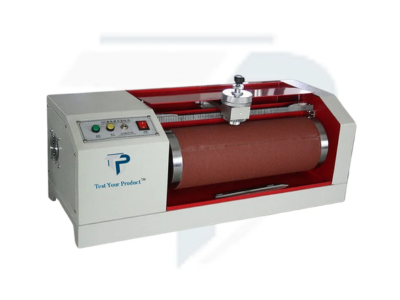
DIN Abrasion Tester
The DIN abrader presents state-of-the-art technology dedicated to the testing of strength and wear resistance of materials used in several industries, footwear, rubber, and polymer industries, in particular. DIN Abrasion tester resistance is a significant aspect in determining the days for which a material naturally resists; it simply means that any material is constantly subjected to friction and wear in normal use. The testing defines the scenario of materials under constant movement and stress, providing very useful feedback for manufacturers to improve the performance and durability of their products.
Product Details
| Category | Specification | |
| Product Name | DIN Abrasion Tester | |
| Model | (Specify model number if applicable) | |
| Usage | Measures wear resistance of rubber, footwear, polymers, automotive parts, etc. | |
| Standards | Complies with DIN 53516, ASTM D5963, IS 3400 (Part 3)-212 | |
| Power Supply | 220V, Single Phase, 50 Hz (Optional: 110V, 60 Hz) | |
| Motor | Special Three-Phase Geared Induction Motor (Long Lifespan) | |
| Cylinder Diameter | 150 ±0.2 mm | |
| Cylinder Length | 460 mm | |
| Load Weights | 5N, 10N | |
| Holder Movement | 4.2 mm per rotation | |
| Traveling Area | 84 Rotations ±2 Rotations | |
| Dimensions (L×D×H) | 755 mm × 305 mm × 450 mm | |
| Net Weight | 55 kg (121 lbs.) | |
| Key Features | • Electric lock for rotating cylinder • Mechanical unlocking for abrasive replacement • Adjustable screw for specimens • High reproducibility • Zinc-coated, polished metal base • User-friendly operation |
|
| Applications | Footwear soles, rubber tires, automotive seals, polymer components, QC labs |
The Test Your Product DIN Abrasion Tester works as a specialized machine to mimic real-world conditions of wear and tear on ever-facing materials under daily use. So it assesses how materials such as rubber, footwear soles, textiles, and polymers stand against continuous friction under which processing goes on. Abrasion is simulated on the material sample turned on a rotating drum with the assistance of the standard test conditions determined in the test, which directly measure the rate of abrasion using loads applied to the material. The main focus in carrying out this test is to provide trustworthy answers for forecasting the actual life of materials undergoing extreme service conditions, hence extending product life while ensuring performance properties.
How the DIN Abrasion Tester Works:
The DIN Abrasion Tester is implemented by mounting a small piece of the material under test on the rotating drum, whereby a constant load is applied to it. It simulates actual wear by allowing the material under observation to rub over a predefined abrasive surface. As the Drum rotates, wear is induced through friction between the material and the abrasive surface, and the apparatus measures the amount of material lost, thus supplying the manufacturers with detailed information regarding their products' wear resistance. This information enables them to quantify how well the material can withstand continuous friction, providing essential answers regarding the durability and longevity of their products under real-world conditions.
Advantages of the DIN Abrasion Tester:
Accurate Abrasion Testing:
Testing highly reliable results from the DIN Abrasion Tester enables precise measurement of abrasion resistance so that the Footwear Equipment Manufacturers would know exactly how their products would function in day-to-day life. This leads to better material selection and product development.
Durability Assurance:
Manufacturers can ascertain that materials used in their products are durable enough to withstand stresses coming from real-world conditions, thus producing long-lasting goods in their right.
Versatile Tester:
The DIN Abrasion Tester cannot define limits for the type of materials used in testing; hence, this machine could find applications in multiple industries ranging from footwear and automotive to rubber and polymers, therefore rendering it a flexible tool for testing materials.
Enhanced Product Design:
Testing gives useful information that allows the manufacturers to change product design for meeting life and wear resistance requirements, thus enhancing the product quality for possibly long applications.
Conformance to Industrial Norms:
The DIN Abrasion Tester being in accordance with the DIN and ASTM, thus helps to establish more credible means among manufacturers and fulfill expectations of the customers in testing their products under recognized standards.
Cost and Time-Effective:
The system is cost-effective and saves considerable time. If manufacturers test the materials before proceeding to full-scale production, they could save themselves from a possible error that could cost them a fortune or the resource material. A fairly rapid and old way of testing will also imply shorter lead times, thus assuring the durability and long span of life of the product itself.
Applications of the DIN Abrasion Tester:
Footwear:
The major works of DIN Abrasion Tester include the uncomplicated abrasion and wear testing of various sole and upper materials of the footwear. It helps to assure that shoes will last longer and stay comfortable by simulating wear under accelerated conditions.
Rubber Sector:
It is one of the principal workhorses of the casual rubber industry for testing tyre treads, seals, and other rubber components against rapid friction and pressure.
Automotive Sector:
In the automotive sector, the DIN Abrasion Tester is very good at performing wear and durability tests of materials such as brake linings, clutch plates, and rubber seals.
Polymer and Plastic Testing:
The DIN Abrasion Tester becomes extremely helpful for the manufacturers making polymer-based products, mainly while testing plastic components in industry equipment or consumer products regarding their integrity against abrasion.
Quality Control:
In testing labs and quality control centres, the DIN Abrasion Tester determines wear resistance standards before materials attain approval for commercial use or sale.